By Dr. Arturo Mendoza-Valdés
Under the joint leadership of Dr. Ashish Kamat, President of the International Bladder Cancer Group (IBCG), and Dr. Arturo Mendoza-Valdés, member of the IBCG and Scientific Committee Chairman of the Mexican Urologic Oncology Association (AMUO), and its former and current Presidents, Dr. Juan Carlos Huerta and Dr. Héctor Sanchez, respectively, a landmark initiative was launched to develop the Mexican Bladder Cancer Guidelines.
Following almost two years of dedicated work, the IBCG, together with the AMUO, the Mexican Urologic Association (SMU), and the Colegio Mexicano de Urología (CMUN), convened on October 3–4, 2024 in Mexico City to create the first national, evidence-based guidelines for the diagnosis and management of bladder cancer in Mexico.
While numerous international guidelines exist—such as those of the AUA, EAU, NCCN, and IBCG—most are broadly concordant, differing mainly in nuance. The goal of this project was not to reinvent new guidelines, but rather to integrate the best elements of existing ones, updated with the latest evidence, into a clear, practical, and resource-sensitive framework reflecting Mexico’s healthcare systems.
To ensure genuine national representation and broad consensus, the Presidents of the major Mexican urologic associations and leading urologists dedicated to bladder cancer were invited to participate, along with the heads of the most important academic and government institutions, including ISSSTE (Hospital 20 de Noviembre, Hospital de Iztapaluca), IMSS (Centro Médico Nacional Siglo XXI, La Raza), the Central Military Hospital, and hospitals under the Health Ministry, such as Hospital General de México, Instituto Nacional de Ciencias Médicas y Nutrición Salvador Zubirán, Hospital Gea González, and the National Cancer Institute, as well as leading centers in Guadalajara, Monterrey, and Mérida. These institutions also represent the country’s major urology residency training programs.
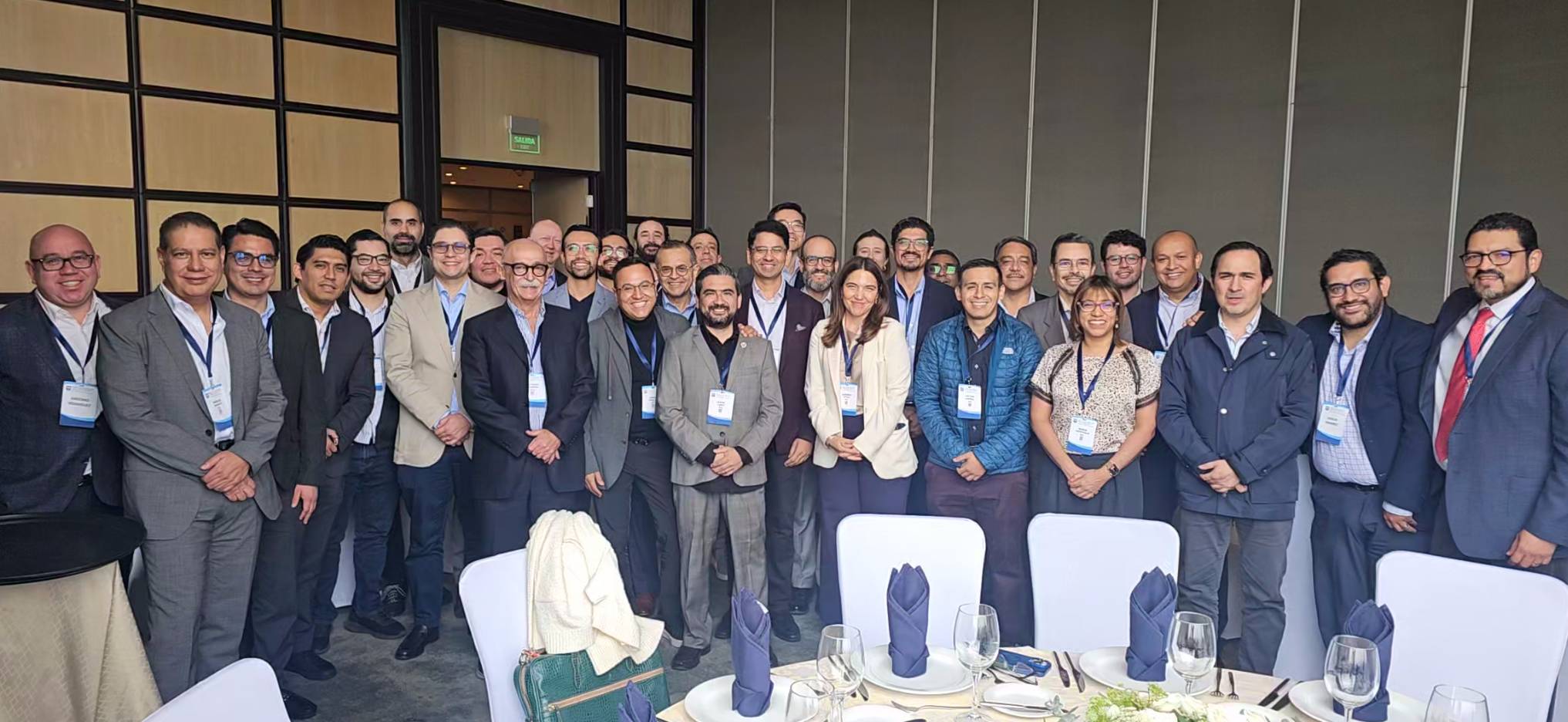
 In total, around 40 specialists from across Mexico participated—predominantly urologists, joined by medical oncologists and radiation oncologists. From the IBCG, participants included Drs. Ashish Kamat, Roger Buckley, Roger Li, Mario Fernández, and Andrea Apolo.
The meeting opened with welcoming remarks from Dr. Kamat and Dr. Mendoza-Valdés, who outlined the rationale, objectives, and methodology for developing the guidelines. Dr. Kamat emphasized the spirit of collaboration, inclusiveness, and patient-centeredness that defines IBCG’s global mission.
The scientific sessions covered the full spectrum of bladder cancer:
- Dr. Roger Buckley presented on NMIBC screening and diagnosis, including epidemiology, etiology, staging systems, CIS and variant histology, and biomarkers for early detection.
- Dr. Roger Li addressed NMIBC risk stratification, treatment strategies, and recurrence after BCG, including practical recommendations for Mexico such as the adoption of enhanced imaging technologies for cystoscopy where feasible.
- Dr. Mario Fernández discussed MIBC management, focusing on neoadjuvant therapy, bladder preservation, and partial cystectomy.
- Dr. Andrea Apolo concluded the meeting with a comprehensive update on systemic therapies for metastatic urothelial carcinoma, including newly available and forthcoming options in Mexico.
Each presentation was followed by vigorous discussion and debate, with participants actively engaged in refining statements and recommendations. On the final day, all topics underwent structured review and voting in the IBCG’s modified Delphi consensus format, similar to IBCG’s annual international retreats.
The meeting was highly successful, achieving its academic and collaborative goals in a collegial, respectful, and energetic environment. On Friday evening, participants gathered for a traditional Mexican dinner that reinforced the camaraderie and unity of purpose shared by all.
The finalized Mexican Bladder Cancer Guidelines will be formally presented to the national urology community at upcoming major meetings, including the SMU Annual Meeting (November 2025), ANUER (January 2026), CMUN (June 2026), and AMUO (July 2026). They will be disseminated widely to ensure that urologists across the country have access to up-to-date, evidence-based recommendations, enabling the best possible care for patients with bladder cancer in Mexico.
In conclusion, this IBCG initiative, which this year focused on Mexico, was an outstanding success thanks to the dedication and enthusiasm of every participant—from both the Mexican and IBCG teams. The meeting demonstrated that Mexican specialists from diverse associations and institutions can unite under a shared vision to advance patient care, echoing IBCG’s broader mission of global collaboration and scientific excellence in bladder cancer.